
Imagine sharing your life with a creature that possesses the intelligence of a toddler and the wingspan of a small hawk. The hyacinth macaw parrot is often called the “gentle giant” of the bird world, but bringing one home is far more than a hobby. It’s a 60-year partnership. You likely already feel the weight of this decision. Finding a bird that’s been hand-reared with love, rather than one caught in the wild or poorly bred, is the most important step you’ll take. It’s about finding a family member, not just a pet.
We want to help you ensure that your journey starts with a healthy, socialized companion and a clear understanding of the commitment required. This guide explores everything from their affectionate temperament to the strict CITES legalities you need to know. We’ll also look at how to prepare your home for a bird of this scale and how to ensure you have a long-term health guarantee. By the end, you’ll have a complete roadmap for welcoming a tame, affectionate giant into your life for decades to come.
Key Takeaways
- Understand the unique physical traits of the hyacinth macaw parrot, from its stunning cobalt plumage to its record-breaking size as the world’s largest flying parrot.
- Explore the remarkable intelligence of these sentient companions, who form deep bonds and possess the emotional complexity of a young child.
- Assess your home’s readiness by learning about the specific space requirements and durable environments needed to house a 40-inch “gentle giant.”
- Secure your future together by mastering the legal paperwork required for CITES Appendix I species and the health benefits of choosing a weaned bird.
- Discover how specialized hand-rearing and decades of breeding experience result in a tame, socialized bird ready to join your family flock.
What is a Hyacinth Macaw? Understanding the Gentle Blue Giant
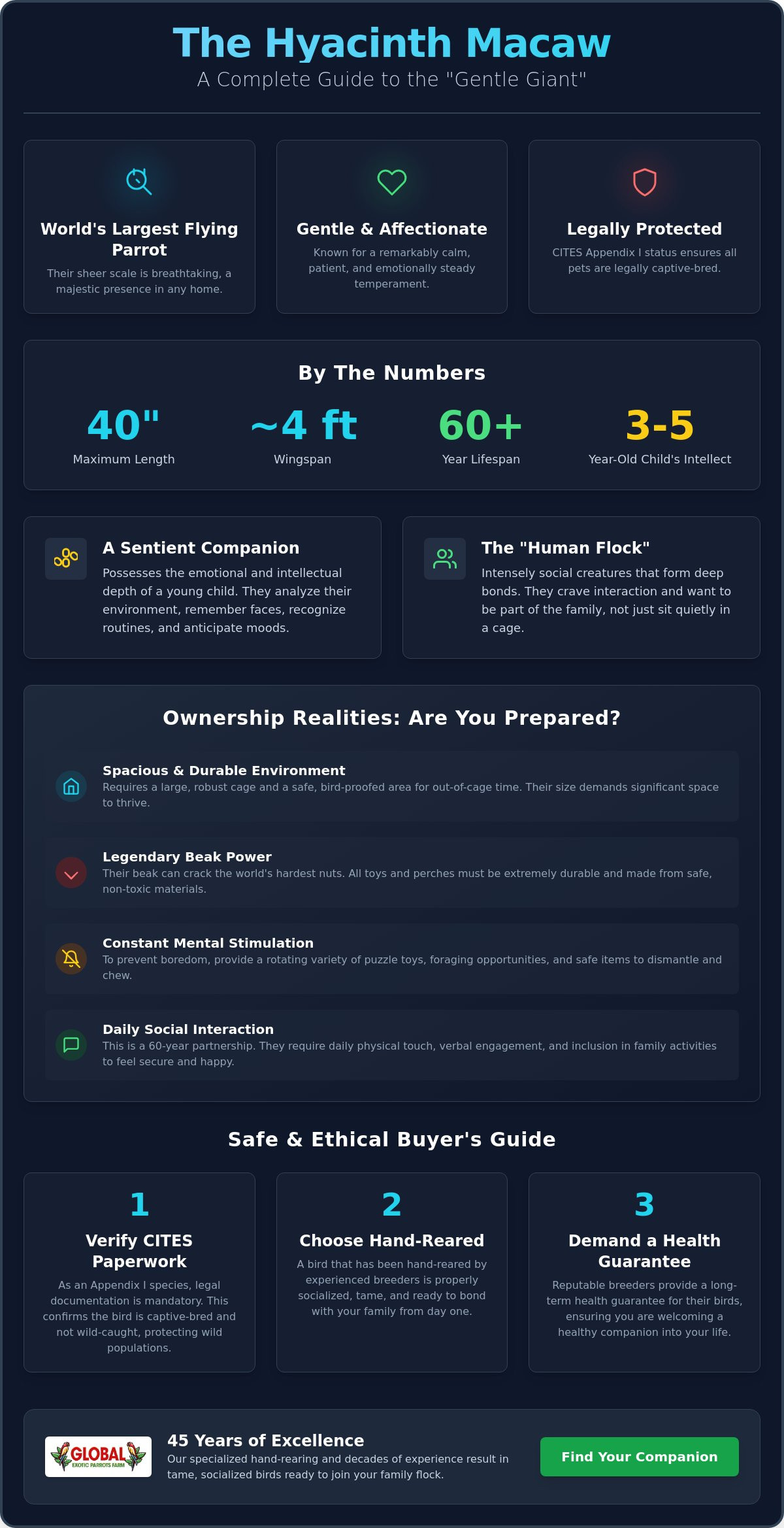
Bringing a hyacinth macaw parrot into your home isn’t just about owning a bird. It’s a lifestyle choice that introduces you to a masterpiece of nature. As the world’s largest flying parrot species, the Hyacinth Macaw (*Anodorhynchus hyacinthinus*) represents the pinnacle of the avian world. Their plumage is a deep, velvety cobalt blue that seems to glow under the right light. This striking color is perfectly accented by bright yellow rings around their eyes and at the corners of their beaks, giving them a perpetual “smiling” expression. When you see one in person, its sheer scale is breathtaking. They can reach up to 40 inches in length and boast a wingspan of nearly four feet. It’s a majestic presence that fills a home with awe.
Despite their massive size and intimidating beak, they’ve earned the nickname “Gentle Giant.” This isn’t just a marketing term; it’s a reflection of their unique soul. Their temperament is remarkably calm compared to smaller, more high-strung macaws like the Scarlet. They tend to be more patient, affectionate, and emotionally steady. They don’t just occupy space in a cage. They seek out human interaction with a sincerity that’s rare in the animal kingdom. They want to be part of your daily life, offering a level of companionship that feels more like a deep friendship than traditional pet ownership.
The Origins of the Cobalt King
These birds hail from the heart of South America, specifically the Pantanal and Amazon basins. These vast wetlands and forests shaped their high intelligence and social needs. In the wild, they live in tight-knit groups. This makes them incredibly social creatures that crave a “human flock” to feel secure. Their natural environment required them to be expert problem solvers, which translates to a pet that needs constant mental stimulation to thrive. Because their wild populations are categorized as “Vulnerable,” they’re protected under CITES Appendix I regulations. This legal status is vital for you to understand. It ensures that every hyacinth macaw parrot in the trade is legally captive-bred, which helps protect the species from illegal trapping and habitat loss.
Distinguishing Features from Other Macaws
When you compare a Hyacinth to a Blue and Gold or a Scarlet Macaw, the differences are obvious. It’s not just the solid blue color. The Hyacinth is significantly larger and possesses much greater beak power. Their solid black, massive beak is a specialized tool designed to crack open the hardest nuts in the world, including macadamia and palm nuts. This strength is legendary among bird enthusiasts, yet they use it with surprising gentleness when interacting with their favorite humans. Their dexterity is equally impressive thanks to their zygodactyl foot structure, where two toes point forward and two point backward to allow for expert gripping and climbing.
Intelligence and Behavior: Life with a Sentient Companion
Living with a hyacinth macaw parrot is less like owning a bird and more like sharing your life with a sentient, feathered roommate. These birds possess incredible cognitive abilities. Many experts compare their emotional and intellectual depth to that of a three to five year old child. They don’t just react to their environment; they analyze it. They remember faces, recognize routines, and even anticipate your moods. This high level of intelligence means they require an owner who is ready to engage with them as a partner rather than a decoration.
Their social nature is perhaps their most defining trait. In their natural habitat, they are rarely alone. When brought into a home, you and your family become their “human flock.” This bond is intense and deeply rewarding. They thrive on physical touch and verbal interaction. If you’re looking for a bird that will sit quietly in a corner, this isn’t the species for you. They want to be in the middle of the action, whether you’re folding laundry or watching a movie with the family.
Their play style is incredibly tactile and curious. A Hyacinth uses its beak like a third hand to explore every texture in its reach. They require significant mental stimulation to stay happy. This means providing a rotating variety of puzzles, chew toys, and foraging opportunities. Without this engagement, their sharp minds can turn toward boredom or even neurotic behaviors. They love to dismantle things, so be prepared to provide plenty of safe, durable wood toys for them to “work” on throughout the day.
When it comes to noise, you should expect a powerful voice. Their vocalizations are part of their Hyacinth Macaw Natural History, where they use loud contact calls to stay in touch with their mates across vast distances. In a domestic setting, they are certainly loud, but they are often less “screamy” than other large species like cockatoos. Their calls are usually purposeful, used to signal excitement or to find out where you’ve gone.
The “Gentle” Temperament: Fact vs. Fiction
You’ll often hear them called “gentle giants,” and for a well-adjusted bird, that’s exactly what they are. They are generally more patient and less prone to sudden aggression than smaller, high-strung parrots. However, this gentleness isn’t accidental. It’s the result of expert early socialization. A bird that has been lovingly hand-reared is much more likely to remain calm and affectionate. They can be wonderful with different family members, including children, provided everyone is taught how to respect the bird’s boundaries. If you’re looking for a well-socialized macaw parrot to join your family, starting with a reputable breeder is the only way to ensure this temperament.
Mimicry and Communication
While they aren’t the most prolific talkers in the parrot world, they are excellent mimics. They might not learn hundreds of words like an African Grey, but they can learn to speak clearly and in context. They often pick up household sounds, laughter, or the names of their favorite people. You can encourage speech through positive reinforcement. Use treats and enthusiastic praise when they mimic a word you like. They love the attention, and this social interaction strengthens your bond while giving them a constructive way to use their voice.
Ownership Realities: Are You Ready for a Hyacinth Macaw?
Deciding to bring a hyacinth macaw parrot into your home is a choice that will reshape your daily life for decades. It’s a beautiful, soul-stirring experience, but it requires a level of preparation that goes far beyond typical pet ownership. You aren’t just buying a bird; you’re adopting a 40-inch force of nature with specific biological needs. The first reality every prospective owner must face is the beak. This incredible tool can exert enough pressure to crack the hardest nuts in the world, which means your furniture and baseboards are at constant risk if you don’t provide proper outlets. You need to think about your home environment as a space that must be shared with a creature that explores the world through chewing.
Space is the next major hurdle. A standard parrot cage, even one labeled “extra large,” is often insufficient for a bird of this scale. To thrive, these giants need room to stretch their four-foot wingspan and move without damaging their long, tapering tail feathers. Many successful owners choose to build custom indoor aviaries or dedicate an entire room to their companion. Beyond the physical space, you must consider their specialized diet. Unlike many other macaws that do well on a base of high-quality pellets, the Hyacinth has much higher fat and calorie requirements. Their metabolism is fueled by specific nuts like macadamias, walnuts, and brazil nuts. Providing this diet is a daily commitment to their long-term health and feather vibrancy.
Perhaps the most profound reality is their lifespan. A healthy hyacinth macaw parrot can live for 60 years or more. This means your bird will likely be with you through every major life event, and they may even outlive you. Responsible ownership involves “legacy planning.” You must have a clear plan for who will care for this sentient being if you are no longer able to. It’s a multi-generational commitment that requires deep thought before you take the first step toward purchase.
The Commitment Checklist
- Time: You’ll need to provide 3 to 4 hours of focused, out-of-cage social interaction every single day to keep them emotionally stable.
- Financial: Beyond the initial cost, be prepared for the ongoing expense of specialized nuts, heavy-duty toys they’ll destroy weekly, and regular checkups with an avian specialist.
- Environmental: Your living space must be bird-proofed, and you’ll need to manage the noise levels that come naturally with such a large species.
Managing Beak Strength and Chewing
It’s vital to understand that chewing isn’t a “behavioral problem” for these birds; it’s a biological necessity. It keeps their beak trim and their jaw muscles healthy. You can’t stop a Hyacinth from chewing, so your goal is to redirect that energy. You’ll need to invest in toys made of stainless steel or extremely dense, untreated hardwoods that can withstand significant pressure. Foraging puzzles are also excellent tools. By hiding their favorite macadamia nuts inside a durable toy, you turn their need to chew into a rewarding mental game that keeps them occupied and away from your furniture.
How to Buy a Hyacinth Macaw Safely: A Buyers Guide
Bringing a hyacinth macaw parrot into your family is a monumental decision. It’s an investment in a companion that will be by your side for decades. Because these birds are so rare and valuable, you must approach the buying process with extreme care. The most critical factor is ensuring you buy a “weaned” bird. Some sellers might try to convince you to finish hand-feeding a chick yourself, claiming it builds a stronger bond. Don’t fall for this. Hand-feeding a giant macaw is a delicate, high-risk process that can lead to crop burns or aspiration if you aren’t an expert. A weaned bird has already learned to eat a variety of healthy foods on its own. This ensures the bird is emotionally stable and physically robust before it ever reaches your home.
Legal protection is another non-negotiable part of the process. The Hyacinth is a CITES Appendix I species, which means international trade of wild-caught birds is strictly prohibited. When you buy your bird, you must receive official paperwork proving it was legally captive-bred. Without these documents, you could face legal trouble, and you’d be supporting the illegal wildlife trade. Always look for signs of a healthy bird during your first interaction. Their eyes should be clear and bright, not cloudy or weeping. Their nares (nostrils) must be clean and free of discharge. A healthy Hyacinth stands tall with an alert posture and displays vibrant, deep blue feathers without excessive fraying or stress bars.
There’s also a big difference between a bird that’s simply “hand-reared” and one that is truly “socialized.” A hand-reared bird was fed by humans, but a socialized bird was raised as part of a family. They should be comfortable with different sights, sounds, and people. If you want a bird that is truly ready for life in a busy home, you should view our available macaw parrots to see the results of expert socialization.
Verifying Your Breeder
Don’t be afraid to ask tough questions. You want a breeder who has a deep history with this specific species. Ask how many years they’ve been breeding Hyacinths. A legacy of 45 or more years of experience is a hallmark of quality you can trust. It shows they’ve seen every possible scenario and know how to raise healthy, happy birds. Ask to see the facility via a live video call if you can’t visit in person. A reputable breeder will be proud of their clean, spacious environment and will offer post-purchase support to help you through the transition period.
The Importance of a Health Guarantee
A professional breeder will always provide a written health guarantee. This should include DNA sexing so you know for sure if you have a male or female. It must also include negative test results for common avian diseases like PBFD and Polyomavirus. Most guarantees require you to take the bird to an avian veterinarian for an initial exam within the first 48 hours. This protects you and ensures the bird is exactly as healthy as promised. Choosing a weaned bird from a breeder who stands behind their health is the only way to start this 60-year journey with peace of mind.
The Global Exotic Parrots Farm Difference: 45 Years of Excellence
Since 1979, we’ve dedicated our lives to the care and preservation of these magnificent birds. Our farm isn’t just a business; it’s a legacy of love and expertise that spans over 45 years. When you choose a hyacinth macaw parrot from us, you’re benefiting from decades of specialized experience in avian husbandry. We focus on two things above all else: health and temperament. We don’t just view these birds as animals we sell. We see them as future family members. This perspective drives every decision we make, from our meticulous cleaning protocols to our specialized hand-rearing techniques. We want your new companion to be a tame, playful, and confident partner that fits seamlessly into your home.
We take pride in our facility’s standards. Every bird in our care receives individual attention and a diet tailored to their specific biological needs. Our long history in the industry has allowed us to refine our methods to a level that few can match. We’ve seen the species’ needs evolve, and we’ve adapted our care to ensure every chick has the best possible start in life. Our commitment doesn’t end when a bird leaves our farm. We provide ongoing support to help you and your new companion build a bond that lasts a lifetime.
Our Socialization Process
Raising a giant macaw requires more than just high-quality food. It requires a deep understanding of their emotional development. Our 45 years of experience have taught us that the first few months of a chick’s life are the most formative. We don’t just hand-feed; we hand-socialize. This means our chicks are exposed to the daily rhythms of a busy home environment from a young age. They hear various sounds, meet different people, and are handled with gentle care to build trust. This exposure ensures they grow into friendly and adaptable family members who aren’t easily spooked. We only offer birds that are fully weaned, ensuring they are emotionally stable and eating independently before they join your family flock.
Safe Worldwide Delivery
You might wonder how such a large, sensitive bird can travel across the globe safely. We’ve spent decades perfecting our shipping protocols to ensure the safety and comfort of every bird. Every hyacinth macaw parrot travels in a custom-built, climate-controlled shipping crate designed specifically for their size. We prioritize health and safety above everything else. Our team also handles the complex international documentation and CITES paperwork required for a seamless transition through customs. We take the stress out of the process so you can focus on preparing for your new arrival. Are you ready to meet your new family member? Browse our available Macaw parrots for sale and discover the difference that 45 years of passion can make.
Start Your Journey with the Cobalt King
Owning a hyacinth macaw parrot is a life-changing commitment that rewards you with a bond unlike any other. You’ve learned that these sentient companions require vast space, a specialized diet, and a family that truly understands their emotional depth. Success starts with choosing a partner who prioritizes the bird’s health and socialization from day one. By focusing on weaned birds and verified legal documentation, you ensure a safe and happy future for your new family member.
We’re here to guide you every step of the way as you prepare for this incredible partnership. With 45 years of breeding expertise, we offer health guarantees on all our weaned parrots and provide worldwide safe shipping with full CITES documentation support. We don’t just send you a bird; we welcome you into a community of passionate caretakers. Your journey toward a lifetime of blue-feathered friendship is just beginning, and we’re excited to help you find your perfect match.
Find Your Dream Hyacinth Macaw at Global Exotic Parrots Farm
Frequently Asked Questions
How much does a Hyacinth Macaw cost on average?
The hyacinth macaw parrot is a premium investment due to its rarity and the complex care required for successful breeding. Prices for these birds are significantly higher than other macaw species because they have very low reproductive rates and require months of expert hand-rearing. When you purchase one, you’re paying for decades of breeding expertise and the extensive legal documentation that ensures the bird is captive-bred.
Is a Hyacinth Macaw a good bird for beginners?
No, this species is not recommended for novice bird keepers. Their massive size and powerful beaks require an owner who is deeply experienced in parrot behavior and positive reinforcement training. Beginners often find the intense social demands and the specialized environmental needs of such a large, intelligent bird to be overwhelming without prior experience with large macaws or cockatoos.
How long do Hyacinth Macaw parrots live in captivity?
A healthy hyacinth macaw parrot can live between 30 and 70 years or even longer with proper care. This incredible longevity means that bringing one home is a multi-generational commitment. Most owners prepare a “legacy plan” to ensure their companion is cared for throughout its entire life, as these birds often outlive their original human partners.
Are Hyacinth Macaws legal to own in the United States and Europe?
Yes, they are legal to own provided they are captive-bred and come with the necessary CITES Appendix I paperwork. In the United States, they are also protected under the Endangered Species Act, which regulates their trade to protect wild populations. It’s vital to check your specific state or local laws; some regions have additional restrictions on owning exotic species even if they are legally bred.
What is the best diet for a Hyacinth Macaw?
Their diet must be high in fat and calories, which is a major departure from the needs of most other parrots. In their natural habitat, they specialize in eating hard palm nuts. In a home setting, you should provide a variety of energy-dense nuts like macadamias, walnuts, and brazil nuts. They won’t thrive on a standard seed mix or a low-fat pellet diet alone.
Do Hyacinth Macaws get along with other pets or children?
While they are known as “gentle giants,” their sheer size and strength mean all interactions with children or other pets must be strictly supervised. A well-socialized hyacinth macaw parrot can be incredibly affectionate with family members. However, their play can be rough, and their powerful beaks can cause accidental injury if they become overexcited or feel threatened.
Why are Hyacinth Macaws so expensive compared to other parrots?
The high cost is a direct result of their low reproductive rate and the specialized labor required to raise them. In the wild, only a small percentage of pairs produce offspring each year, and captive breeding is equally challenging. The months of intensive hand-rearing, high-quality specialized diet, and the costs of maintaining CITES-compliant facilities all contribute to their status as a luxury companion.
How big of a cage does a Hyacinth Macaw actually need?
Standard cages are almost never large enough; these birds require a massive custom aviary or a dedicated bird room. The enclosure needs to be at least 6 to 10 feet long to allow them to stretch their four-foot wingspan and climb comfortably. You must use heavy-duty stainless steel construction because their beaks can easily snap or bend the wire used in traditional parrot cages.